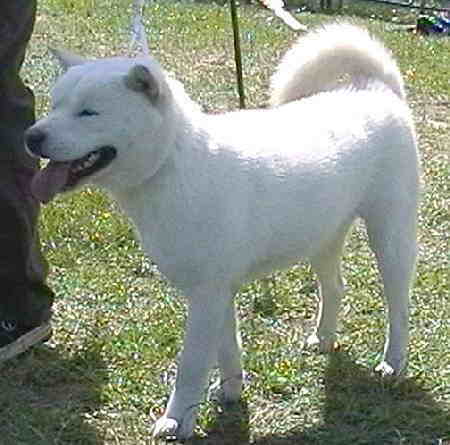
Description: The Ainu Dog is a thin, muscular, sturdy-looking dog. It is impulsive and fast and has a light gait. Ainu's have small, erect ears that are at a right angle to the brow. Its eyes are somewhat small, dark brown and set triangularly. The teeth are healthy, solid and non-protruding. Some have spots of black on their tongues. The bridge is straight leading to its dark nose. The well-fitted lips have dark pigmentation. The tail curls in typical Spitz fashion. The Forelegs are straight and lean and the hindquarters are covered with a double coat. The harsh, straight coat colors come in sesame, brindle, wolf gray, red, brown or white.
Temperament: The Ainu Dog's character is packed full of desirable qualities. He has proven a fearless and determined hunter, watchdog, guard and defender, and at the same time a loyal and well-behaved dog. They have also been used as sled dogs and scenting hounds and can be trained for defense. It is intelligent and quickly trained. This large game hunter is extremely courageous for its size, willing to attack a 650 pound bear! Yet it is still gentle, obedient and home-loving. It has an innate sense of direction and can therefore return to its master no matter how great the distance. This is a typical Shika-Inu, or medium-sized dog: headstrong, stubborn, aggressive with other dogs, but deeply summative to its human family. Despite its long history as a working breed, the Ainu Dog ideally combines the roles of family pet and hunter. This breed should not be allowed to run free around other animals. They are good with children if they are raised with them from puppyhood.
Height & Weight: 18~22 inches ; 20-30 kg
Living Conditions: Not meant to be an apartment dog. They live open spaces and yards. Their thick coat protects them from cold.
Grooming: The harsh, straight, double coat of the Ainu Dog should be brushed and combed on a regular basis.
Origin: The Ainu Dog is a Japanese Spitz breed rarely seen outside that county. The dog was named after the Ainu tribe. Origin is unknown. They arrived in Japan over 3,000 years ago when the Ainu brought this Spitz-type dog with them. As the Ainu were pushed onto the island of Hokkaido by an influx of Japanese people, their dogs gradually became restricted to this island. The dog's ever alert and suspicious nature lent itself to the required role of village guardian. Their dog has changed little over the centuries. The Ainu Dog is probably the oldest of the Japanese breeds. It was later named the Hokkaido Dog, but is still better known as the Ainu Dog; indeed it is registered with the FCI under that name.
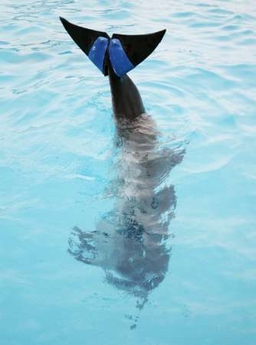
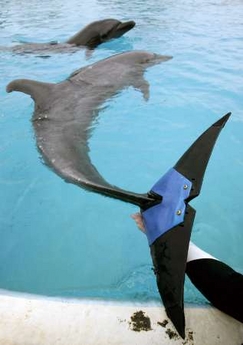
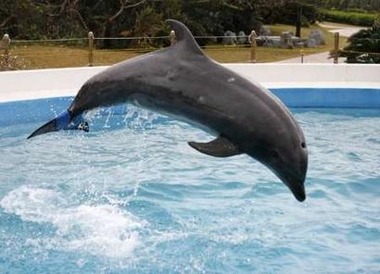
A Japanese dolphin is squealing with delight after receiving a prosthetic tail to replace one amputated due to a skin disease. Fuji's handlers at the Churaumi Aquarium in Japan's southern most island of Okinawa say the fake tail may have saved her life as she had put on dangerous amounts of weight from being inactive after she lost her tail. "Because she was not exercising enough (after her tail was amputated) she gained weight and from blood samples we took we realized that her cholesterol levels were too high. We then were afraid that this might trigger other diseases so we had to come up with something," handler Masaya Koami said. The tail was custom made for Fuji by a friend of the handler who works at Japan's leading tire company Bridgestone. The rubber prosthetic device is slightly smaller than the tail of a dolphin of Fuji's size. It is made of material used for Formula One race car tires and the black silicon rubber was reinforced with artificial bone made of carbon-fiber. Sponge rubber was used for parts that come directly in contact with Fuji's skin. Bridgestone said they spent at least 10 million yen (about $83,000) to develop and produce the fin. As for Fuji, the freedom that it brought her is priceless. After initially being frightened of it, the dolphin now leaps and swims with vigor.
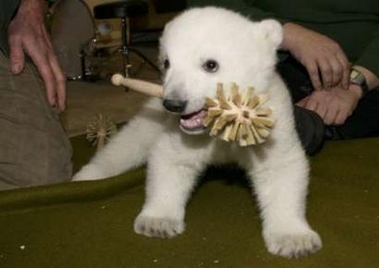
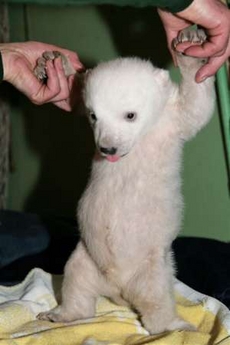
Polar bear cub Knut plays in the Berlin zoo. Knut, born on December 5, 2006, weighs 6500 grammes and had to be hand fed every four hours by zoo employee Thomas Doerflein after its mother Tosca refused the baby.
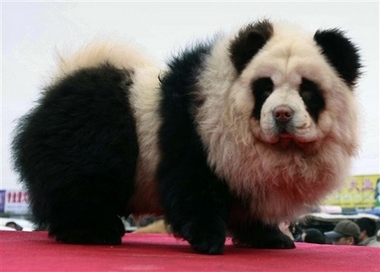
A Chow Chow dog painted in the likeness of panda is displayed for sale at a pet market in Shenyang, China's Liaoning province
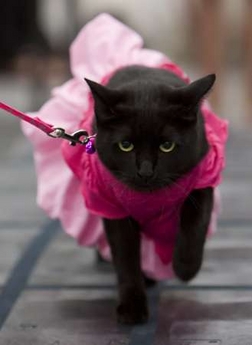
'Goblin' the cat takes to the 'catwalk' in a pink dress at the PETCO Spring Fashion Show at a San Diego, California PETCO. The PETCO Spring Fashion Show was held at more than 800 PETCO stores across the United States to allow proud pet owners to show off their fashion-forward animals.
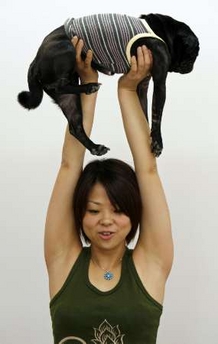
Instructor Momoe Yamamoto demonstrates yoga with her dog Moq, a four-year-old Pug
Chaco, a four-year-old Kaninchen Dachshund, takes part in a 'Dog Yoga' lesson organised by Japan Dog Yoga Association with owner Satoe Tachi at Nippon Ayurveda School in Tokyo. The lesson isaimed at improving health and bonding owner and dog through yoga.
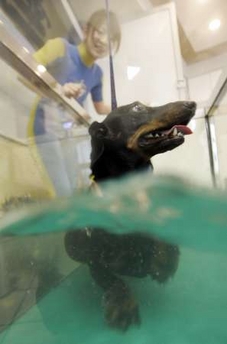
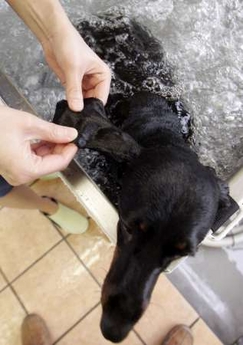
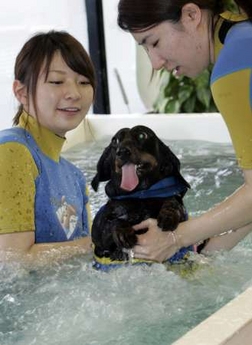
Momo, a 5-year-old dachshund. walks on an aqua treadmill at 'El Perro', an aqua fitness centre for dogs, in Tokyo. The fitness centre has physical training and weight loss programmes and remedies for bone and sinew problems for dogs.
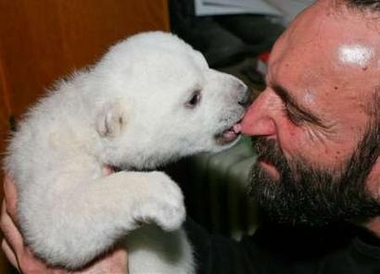
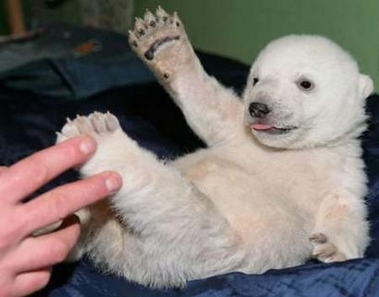
Berlin zoo employee Thomas Doerflein plays with polar bear cub Knut. Knut, born on December 5, 2006, has had to be hand fed by Doerflein after its mother Tosca refused the baby.
Hi!! This is Tony from Los Angeles , CA . A gizmo geek by nature and fond of all sorts of odd gadgets . I have a passion for pets and..Oh Yes! I have 2 dogs , 2 cats , 1 parrot and a cage full of finches . You can learn about interesting pet news, pet photos, pet videos, pet products, and pet care tips from this blog.. That sums of all about me. So come in with all ur aarfs and meaws and enjoy blogging.




 |
» |
|
» |